

the services

the Courses

the podcast
A certified sex therapist and existential psychotherapist committed to thoughtful conversations about love, desire, & embodiment
Meet Dr. Emma

Subscribe to the Intimate Philosopher on:
Apple | Spotify | Amazon | Other Apps
On the Blank Space in the Drawing — with Michelle Dovey
Artist and author Michelle Dovey joins existential sex therapist Dr. Emma Smith to talk about dismantling shame, the female gaze, and why asking for what you want may be where satisfaction actually lives.
Summary
For twenty years, Michelle Dovey was the painter of oak trees. The internationally exhibiting artist and bestselling author trained in New York, showed with a London gallery for two decades, and her nudes sell so reliably that she owns none of them. Then, sketching classical statues in Florence during her divorce, she looked down and found an entire male figure with one region missing. Where the genitals belonged, there was a blank. She hadn’t meant to leave it.
Michelle circled the gap in pencil and filled it in. The next afternoon she drew nothing but the genitals of Michelangelo’s David, and realized that across hundreds of life drawings she didn’t think she had ever drawn that part of the body. So she set out to draw one hundred naked men as an act of permission. She pictured a ten-year project until 10x Is Easier Than 2x talked her into one. She stopped past seventy, in July 2025, because she felt finished. What came out of it was a theory of shame and a practice she calls the shameless ask: sensing what you want, trusting it, and naming it clearly. This episode belongs to her. Dr. Emma follows the thread to where it runs through the couples in her office.
What the pencil wouldn’t look at
Dr. Emma calls it a black box. Michelle calls it a blind spot, and hers is the more exact word. A taboo is something you know you’re steering around; a repressed thing is buried out of view. A blind spot sits in plain sight. Michelle was looking straight at the statue, and the conditioning, as she puts it, was actively in her brain that she was not looking.
That matters clinically. When Dr. Emma asks clients whether they have ever said to their partner what they just said to her, the reason they haven’t is rarely hiding. It is usually some mix of not knowing it was there, not knowing how to say it, and never having been asked. None of those is a secret, and each one leaves a blank on the page.
A few questions worth carrying in before you press play:
- Where in your erotic life is there a region you draw around without deciding to?
- Whose voice arrives, fast, when you get near it?
- If someone you trusted circled the gap in pencil, would you fill it in or turn the page?
The people who loved Michelle begged her to stop. They worried for her safety and were sure something terrible would happen once she shared it online, even though she had framed it around the female gaze, which is entirely current in the museum world. Her reading of their alarm is one of the most useful ideas in the conversation: her drawing was triggering their shame. Shame works like a smoke alarm wired to the whole house. One person looks directly at the forbidden thing, and everyone in the building starts shouting about safety.
The men told a different story. Over two and a half hours, they told her about their bodies and about the moments that taught them something about them wasn’t okay. Many said it was the first time they had felt seen. It worked, Michelle says, because the setting was near sex without being sexual, and the clearer her structure, the more everyone’s nervous system settled. Dr. Emma recognizes the shape from her own office, where everyone keeps their clothes on. About once a month an email arrives hoping otherwise. She wants nothing from the person in front of her, which is what makes it safe for them to be witnessed.
“How would you like us to pose?” (Ask for what you want)
The hinge of the project was a question the men kept asking. For the first ten or fifteen sessions, Michelle answered with some version of “whatever’s comfortable.” Then she started asking, and watched what happened inside her. Asking made her feel fantastic whether or not she got what she asked for. The couple of times she didn’t ask, she ended up irritated, tired, and a bit grumpy. She had assumed satisfaction was something another person would give her. It turned out to live in the ask.
Dr. Emma takes this into long-term partnership, where asking for what you want gets harder. The stranger from the bar has no file on you. The partner of fifteen years has a thick one, and any request can be read as a revelation. Asking well is also iterative: you guess, you try, and you have to say wait, pause, not like that. Most of us also let ourselves ask only when there’s a defensible reason, logistical or economic. Desire asked for its own sake, the erotic version of art for art’s sake, catches even the perfectly assertive.
The image to keep comes from Michelle’s life-drawing classes for women. A woman sits with a pencil in front of a naked man whose entire job is to take direction, and she asks whether he could just decide how he’d like to stand. Anyone who works with Type A++ couples knows the reflex: people who can run a household, a team, and a calendar with surgical precision, and who cannot tell the person they love to move a hand two inches to the left. How much of the low-grade irritability in a long partnership is left over from asks nobody made?
Michelle also splits the job in two. She takes a few minutes to find out what she actually wants, and then the part of her she calls masculine takes over: you figure out what you want, I’ll ask. Knowing and asking are separate acts. Most of us try to do both in the same breath and manage neither.
The gaze, turned around
On her Venice art tour, Michelle points out that the art we were taught to revere was made by men, so we learned to see ourselves from the outside in. Her drawing sessions reverse the direction of the looking. Dr. Emma turns it toward the men she works with, many of whom want, underneath everything, to feel desired, and have learned to file that longing under feminine. She tells them it is simply human to want to be perceived, to be witnessed, to have someone want to close the distance toward you. Michelle found a phrase for it in a tantric gazing practice: to be beheld.
Near the end, the talk drifts to Venice, a city built on marshes by people who apparently agreed, in some long-ago meeting, to skip the streets and just have boats. Michelle’s takeaway is plainer: ask for what you want and see what happens. Dr. Emma adds the qualification that keeps it honest. It may look different than what you thought.
Who this is for
If you are very good at running things and very bad at asking for what you want, this conversation is for you. Details on Michelle’s November 4–8 Venice retreat are in The Receipts below.
The question to leave with
If the person you love turned to you tonight and asked, in plain words, how you would like them to be, would you have an answer ready, or would you hand the pencil back?
Moments Worth Noting
“The conditioning is actively in my brain that I am not looking.” — Michelle Dovey
“It’s usually some combination of I didn’t know it was there, I didn’t know how to say it, and no one’s ever asked.” — Dr. Emma
“I thought satisfaction would be something that somebody else would give me.” — Michelle Dovey
“Sweetheart, you figure out what you want, I’ll ask.” — Michelle Dovey
“You can ask for what you want and see what happens.” — Michelle Dovey
Chapters
- 00:00 — How we met: the mastermind auction
- 02:41 — The good girl at the dinner party, and a midlife pivot
- 04:18 — Why America feels freer
- 06:02 — Culture, shame, and being a good guest
- 10:09 — From oak trees to Florence: the blank space in the drawing
- 13:45 — The blind spot
- 14:27 — One hundred naked men in one year
- 16:13 — When the people who love you say stop
- 17:49 — How the men responded: being seen
- 20:23 — Containment in art and in the therapy room
- 22:38 — Thresholds, boundaries, and consent
- 24:28 — “How would you like us to pose?”
- 27:32 — Why asking is harder with someone who knows you
- 30:28 — Life-drawing classes for women
- 32:09 — Knowing what you want before you ask
- 35:08 — The ICON method
- 36:27 — Art for art’s sake, and asking without a reason
- 37:24 — Turning the male gaze around
- 38:44 — Men and the wish to be desired
- 40:22 — To be beheld
- 42:02 — Venice, November 4–8
- 45:21 — Wonder, the Grand Canyon, and people who built impossible things
- 50:37 — Ask for what you want and see what happens
- 52:30 — Closing
The Receipts
Where things get nerdy.
Michelle Dovey
- The Invitation: Michelle’s home for her work on the shameless ask → https://invitation.michelledovey.com
- Michelle’s Venice retreat, November 4–8, 2026, with an art tour, life drawing, and Murano glass → https://venice.michelledovey.com/unedited
- [Michelle’s book: title and link to confirm]
- [Michelle’s Instagram handle: to confirm]
Named on the episode
- Dan Sullivan and Benjamin Hardy, 10x Is Easier Than 2x: the idea that turned a ten-year project into a one-year one.
- Brené Brown’s work on shame, which Michelle cites for the idea that shame doesn’t survive being shared openly. For background, see Daring Greatly (the book itself isn’t named on air).
- Michelangelo’s David, Galleria dell’Accademia, Florence.
- Titian, Tintoretto, and Tiepolo, the Venetian painters on Michelle’s art tour.
Background reading (not discussed on air)
- John Berger, Ways of Seeing (1972): the classic account of how European painting taught women to watch themselves being watched.
- Laura Mulvey, “Visual Pleasure and Narrative Cinema” (1975): the essay that introduced the term “male gaze.”
- Rollo May, Love and Will (1969): on why desire that is never willed into action stays a wish.
💌 Stay Connected
Support for the show. The show is made possible in part by Nine to Kind Planners — a planner Emma actually uses, which is a lower bar than it sounds and one most planners fail. ninetokind.com, code EMMA20 for 20% off. → https://ninetokind.com/
Tell us what it unlocked. If this conversation turned up a blank space of your own, or a request you’ve never quite made out loud, Dr. Emma would like to hear it → http://forms.gle/sS7z5AFH1DohJjAU6
You can find Dr. Emma on Instagram at @emmasmithphd If there’s a question you’ve been almost afraid to ask, the show wants it @theintimatephilosopherpodcast
Keywords: Guest Conversations / Desire / Shame and Embodiment / Existential Sex Therapyherapy / Grief and Loss / Emotional Intimacy / Relationship Communication
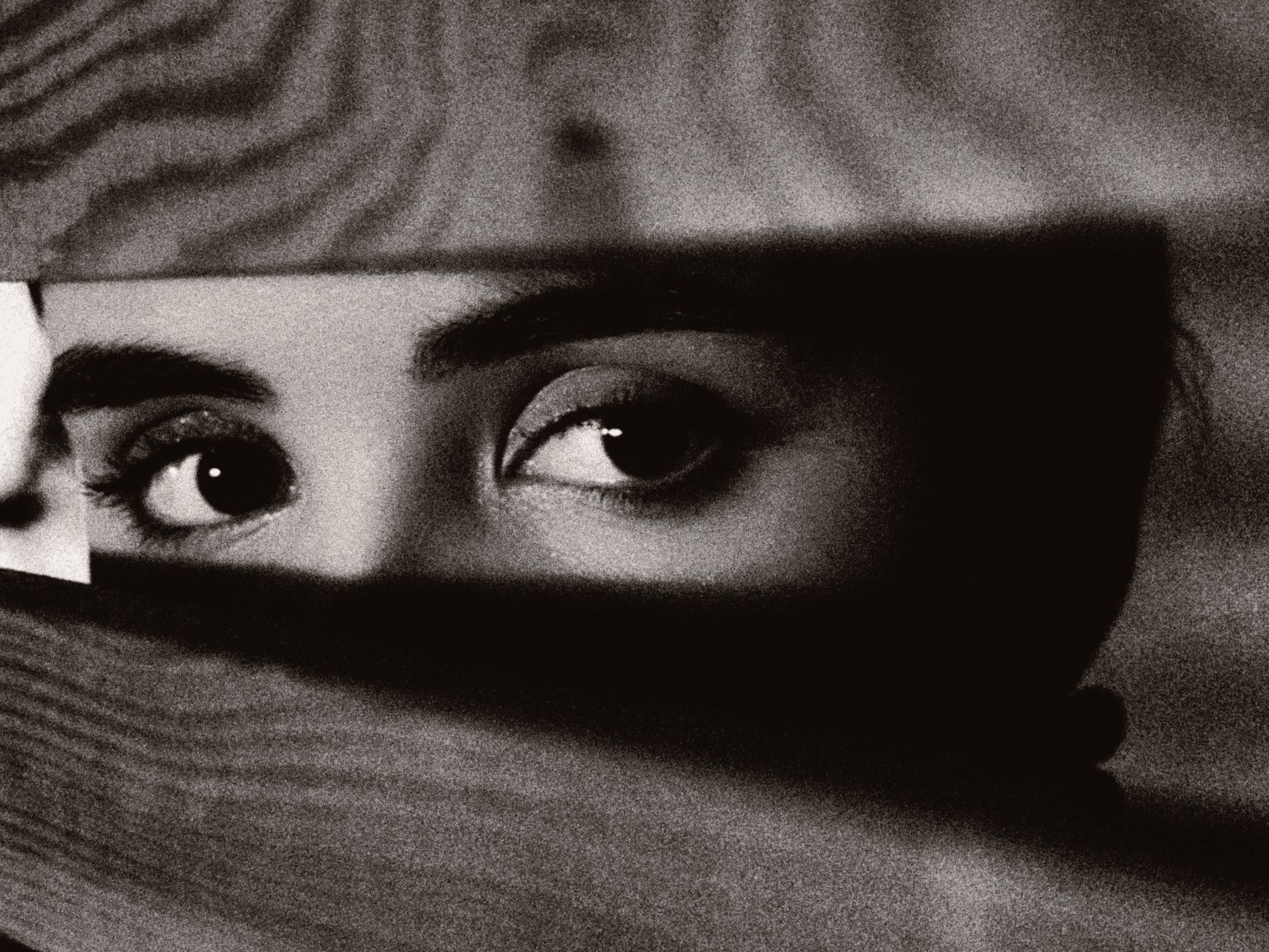
The Female Gaze
older posts
older posts
newest posts
© 2025 Soliloquie
Step into the inner circle—exclusive insights and your gateway to transformation.
The VIP List
Soliloquie offers tailored psychotherapy for trauma recovery, personal growth, and relational healing.
Soliloquie
No Surprises Act: You have the right to receive a Good Faith Estimate of what your services may cost.


Serving clients in TN, DC, VA, & TX


Comments will load here